“My car pulls to one side when I brake”
A caliper that isn't applying, or one that's stuck applied, makes one side brake harder than the other. Tire pressure and suspension wear can also cause a pull, so we check those before blaming the caliper.
Brake Caliper Repair · Victorville CA
A vehicle that pulls to one side when you brake, a wheel that runs hot, or pads that wear out on one side much faster than the other often point to the brake caliper. For brake caliper repair in Victorville, CA, our D Street shop at 17033 D St finds out why the caliper isn't working right before we replace anything. Call (760) 241-4253.
The caliper is the clamp that presses the pads against the rotor. When it sticks, leaks or binds on its slides, braking becomes uneven and parts wear out early. We inspect the whole corner, explain what we find and give you a free written estimate. Repairs are backed by our 1-year warranty.
Calipers are one part of the system covered by our full brake repair service. A caliper that has been dragging often damages the rotor, so we check that too.
A caliper that isn't applying, or one that's stuck applied, makes one side brake harder than the other. Tire pressure and suspension wear can also cause a pull, so we check those before blaming the caliper.
Heavy brake dust and heat on one wheel are classic signs of a dragging caliper. The pads stay in contact with the rotor, which wastes fuel and wears the brakes quickly.
When the inner pad is worn much more than the outer one, the caliper slides are often seized. Cleaning and lubricating them, or replacing the bracket hardware, can fix it before the caliper itself fails.
We start by confirming that the caliper is really the cause. A pull while braking can also come from a collapsed brake hose, a worn suspension bushing or a tire with low pressure. We raise the vehicle, spin each wheel by hand to feel for drag, and compare pad wear inside and out. Then we inspect the piston boot, the slide pins and the hose. Measuring wheel temperature after a short drive helps us confirm a dragging brake.
Not every caliper problem means a new caliper. If the piston moves freely and the seals aren't leaking, cleaning and lubricating the slide pins and replacing worn hardware often fixes uneven wear and squeaks. If the piston is corroded, the boot is torn or fluid is leaking, we replace the caliper. On most modern vehicles, replacing it costs less and lasts better than rebuilding it in the shop.
We generally recommend replacing calipers in pairs on the same axle when one has failed from age or corrosion, because the other side has seen the same years and weather. If one caliper failed because of something specific, such as a torn boot after a curb strike, a single caliper may be fine. We explain which applies to you.
After a dragging caliper, the rotor and pads on that wheel are often damaged. Overheated pads can glaze, and the rotor may develop heat spots or uneven thickness. We measure the rotor and check the pads so the new caliper isn't paired with worn parts. If the rotor needs attention, our brake rotor replacement page explains how we decide between resurfacing and replacing it.
Opening the hydraulic system means the brakes must be bled properly afterward. We bleed the system to remove air, top off with the fluid your vehicle calls for and check pedal height and feel before the road test. Old, moisture-filled brake fluid is a common reason pistons corrode, so we'll tell you if a full fluid exchange is a good idea.
Some vehicles use the rear caliper for the parking brake, and some have electronic parking brakes that need a scan tool to retract the piston. We service those correctly so the parking brake works afterward and no warning lights are left on.
Serving the following High Desert Cities
From our D Street shop in Victorville, we serve the following cities.
Tell us what your vehicle is doing — we'll take it from there.
Johnny's Radiator and Auto Repair · 17033 D St, Victorville, CA 92395Monday – Friday: 8:00am – 5:00pm · Saturday & Sunday: 8:00am – 3:00pm
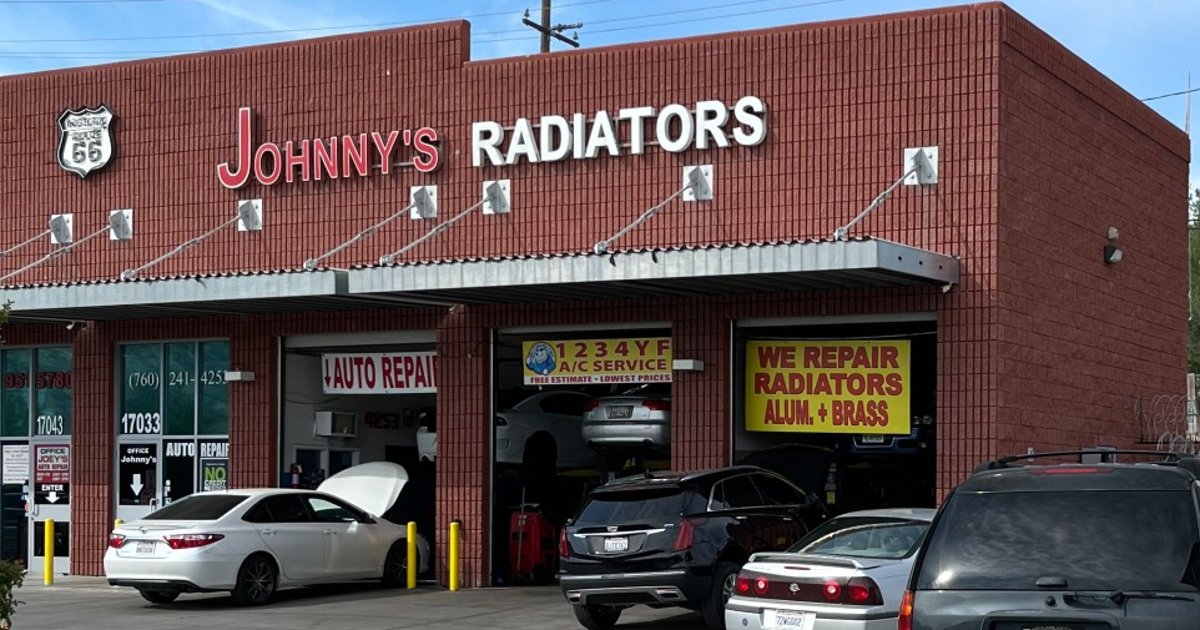
Radiators, fuel tanks and full-service auto repair
17033 D StGeneral auto repair and maintenance near Spring Valley Lake
12180 Ridgecrest Rd Ste 430