“My brake pedal pulses when I stop”
That usually means uneven rotor thickness or pad deposits on the rotor face. We measure thickness and runout to confirm the cause, then explain whether resurfacing or new rotors will fix it.
Brake Rotor Replacement · Victorville CA
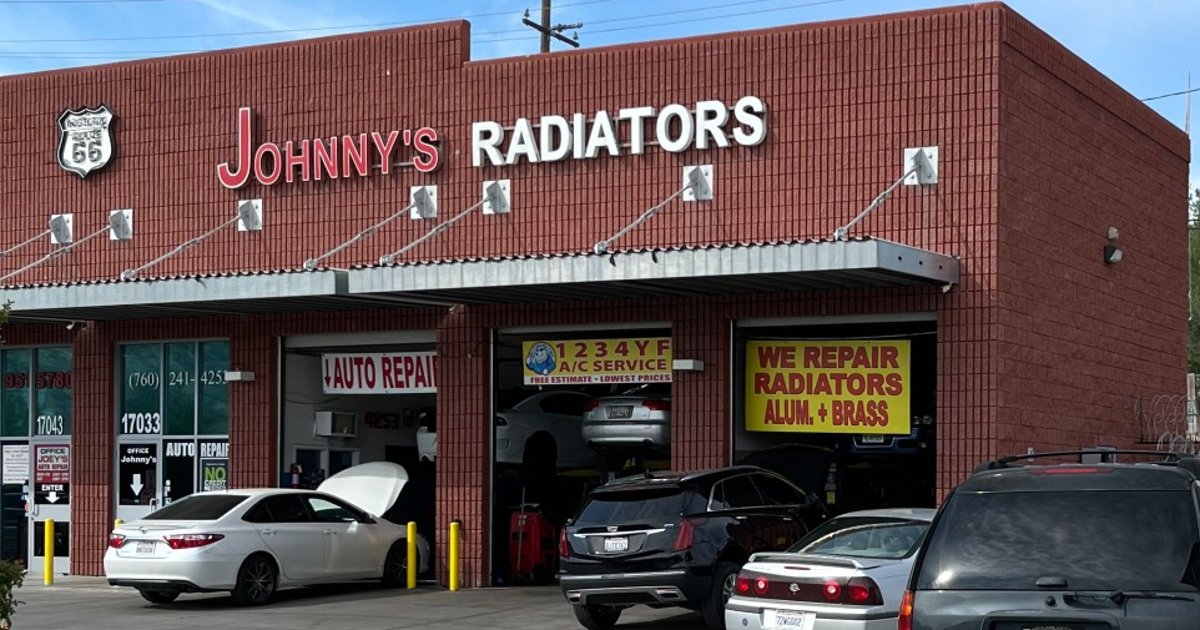
A brake pedal that pulses under your foot, a steering wheel that shakes when you slow down from freeway speed, or a deep groove you can see through the wheel are all reasons to have your rotors checked. For brake rotor replacement in Victorville, CA, our D Street shop at 17033 D St measures the rotors before recommending anything. Call (760) 241-4253.
Rotors are one part of a complete brake system, and they wear together with the pads. We look at both, explain what the measurements show and give you a free written estimate before work begins. Rotor work is backed by our 1-year repair warranty.
If the inspection turns up a problem beyond the rotors, such as a sticking caliper or a soft pedal, our full brake repair service covers the rest of the system.
Resurfacing (also called turning or machining) cuts a fresh, flat face on the rotor. It only makes sense when enough metal is left afterward. Here's how the two options compare.
| Resurface | Replace | |
|---|---|---|
| When it fits | Light scoring or minor unevenness, with plenty of thickness left | At or near minimum thickness, deep grooves, cracks or heat damage |
| Thickness afterward | Thinner than before, so it holds less heat | Full factory thickness |
| Heat handling | Reduced; a thin rotor can warp sooner on long downhill runs | Restored to the original design |
| Typical cost | Lower labor and parts cost when the rotor qualifies | Higher parts cost, often similar labor |
| Our approach | Offered when the measurements support it | Recommended when resurfacing would leave the rotor under spec |
Most rotor complaints start with a pulsing pedal. Drivers often call it a warped rotor, but the cause is usually uneven thickness. Pad material builds up in spots, or the rotor wears unevenly, and the pads grab and release as it turns. We measure thickness at several points and check runout with a dial indicator, so we know whether the rotor itself is the problem or whether a loose wheel hub or uneven lug nut torque is part of it.
Every rotor has a minimum thickness stamped on it by the maker. Below that number, the rotor can't absorb and shed heat the way it was designed to. We measure against that number, not by eye. If the rotor is above minimum and the surface is only lightly scored, resurfacing may be an option. If it is at or near the limit, cracked, or shows hard heat spots, replacement is the safer repair.
Pads and rotors work as a matched pair. Fresh pads on a scored rotor wear quickly and can make noise, and new rotors with old, glazed pads don't stop as well as they should. When we replace rotors, we recommend new pads on the same axle and clean and lubricate the caliper slides so the pads release evenly. If a caliper is sticking, we tell you; a sticking brake caliper is a common reason one rotor wears out early.
Part quality matters. Rotors vary in metal quality, cooling vane design and coating. We fit rotors suited to how you drive. A work truck that tows or a vehicle that runs the Cajon Pass every day gets parts chosen for heat, not just the lowest price. We go over the options on the written estimate so you can choose.
After installation, we torque the wheels to specification in the correct pattern. Uneven lug nut torque is a quiet cause of rotor pulsation, so this step matters. Then we bed in the pads, using a series of controlled stops that lays an even layer of pad material on the new rotor surface. This gives smooth, quiet stops from the start.
Rotor wear is gradual, so many drivers don't notice it until the pedal starts to pulse. Asking us to measure the rotors when you have tires rotated or pads checked costs little and helps you plan for the repair instead of being surprised by it.
That usually means uneven rotor thickness or pad deposits on the rotor face. We measure thickness and runout to confirm the cause, then explain whether resurfacing or new rotors will fix it.
Front rotor problems often show up through the steering wheel at higher speeds. We also check wheel bearings and suspension joints, since looseness there can feel similar.
Deep grooves often come from pads that wore down to metal or from debris caught between the pad and rotor. Grooves that deep usually take the rotor below safe thickness, so replacement is typically needed.
Serving the following High Desert Cities
From our D Street shop in Victorville, we serve the following cities.
Tell us what your vehicle is doing — we'll take it from there.
Johnny's Radiator and Auto Repair · 17033 D St, Victorville, CA 92395Monday – Friday: 8:00am – 5:00pm · Saturday & Sunday: 8:00am – 3:00pm
Radiators, fuel tanks and full-service auto repair
17033 D StGeneral auto repair and maintenance near Spring Valley Lake
12180 Ridgecrest Rd Ste 430